SolidNumber: a fintech platform for online payments, eCommerce and integrations
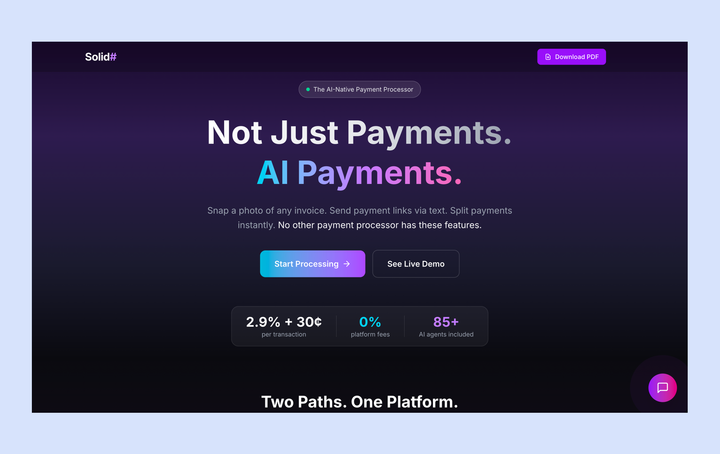
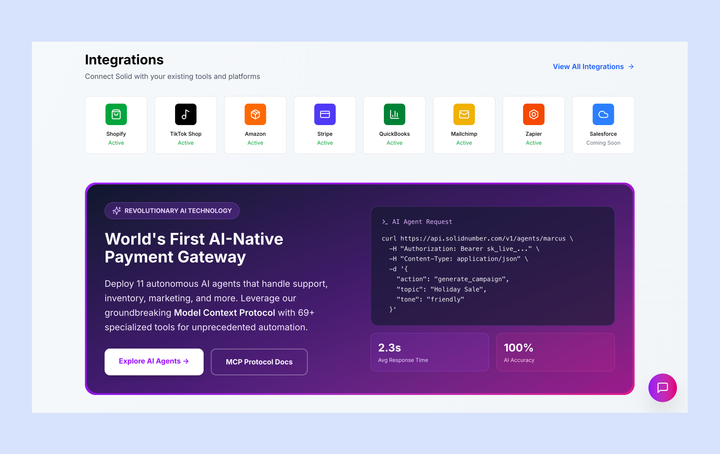
For a US‑based fintech company, we developed a platform that integrates online payments, e‑commerce, and reporting, designed to scale across a wide range of B2C use cases.
The solution was delivered in three phases: enhancing an existing instant transfer system, launching an online store for golf clubs, and developing a universal version of the product with QR payments and a redesigned interface.
The team implemented recipient‑confirmed transfers, secure data storage, iFrame integration, and a flexible architecture. As a result, transfer delays were reduced, error rates dropped significantly, and the share of cashless payments increased by 30–50%.
Client quote
Afterlogic.Works has proved to be a reliable partner. The team provides valuable insights and suggestions for product improvement. They're a patient team that's comprised of great listeners.

About client
The client is a US‑based fintech company with its own payment system, working in a B2B model with golf clubs and other organizations.
About project
The client already had an MVP—CashDrop, an instant transfer system. However, it did not address security requirements and did not support business scalability.
As part of the project, the goal was to enhance the system, integrate it into partners’ websites, launch an online store, and develop an independent, scalable version of the platform.
Request
An additional requirement was the ability to embed the store into golf club websites without fully redesigning the existing UI, as well as evolving the product into a universal fintech solution with strong scalability potential.
At the same time, it was essential to preserve the existing working system while redesigning its architecture: implementing recipient confirmation, enabling comprehensive reporting, and adding modern payment methods.
Tools
Node.js, PHP, and Vue.js were used for backend and frontend development. To enhance security, SELinux and proprietary tools were applied.
The store was embedded into external platforms via iFrame integration. To improve UX and reduce errors, third‑party payment APIs and a confirmation system were implemented. Personal and payment data were protected using secure storage and encryption.
Team
An extended team was involved in the project. On our side, the team included a project manager, a business analyst, two frontend developers, two backend developers, a full‑stack developer, a UI/UX designer, QA specialists, and a DevOps engineer.
On the client’s side, a DevOps engineer and an external infrastructure team participated in the project.
What we did
In the first phase, we introduced recipient‑confirmed transfers, implemented secure authentication, and strengthened encryption. This helped reduce the number of errors and improve transaction security.
Next, we developed an online store and embedded it into golf club websites via iFrame, enabling fast integration without requiring changes to the client’s infrastructure. We also implemented a reporting system that allowed tracking of transactions and user activity.
In the final stage, we completely redesigned the interface, added support for QR payments, removed industry‑specific limitations, and prepared the product for scaling.
The team also addressed vulnerabilities, refactored legacy business logic, improved the overall architecture, and optimized interaction between the frontend and backend.
Result
The client received a reliable and secure platform that reduced transfer times to 1–5 minutes (down from 24 hours) and decreased transaction error rates.
Reporting became faster and more user‑friendly, while manual work was reduced by 40%. The system underwent several iterations and was prepared for scaling to support new use cases.