LookLook
For the LookLook online survey and research platform, we completely redesigned the product: developed a new architecture, revamped the interface, and introduced modern technologies along with cloud services for automatic scaling.
The new version of the platform became faster, more user‑friendly, and more stable—resulting in a 30% increase in the client’s sales and a 2.1x growth in the number of unique users.
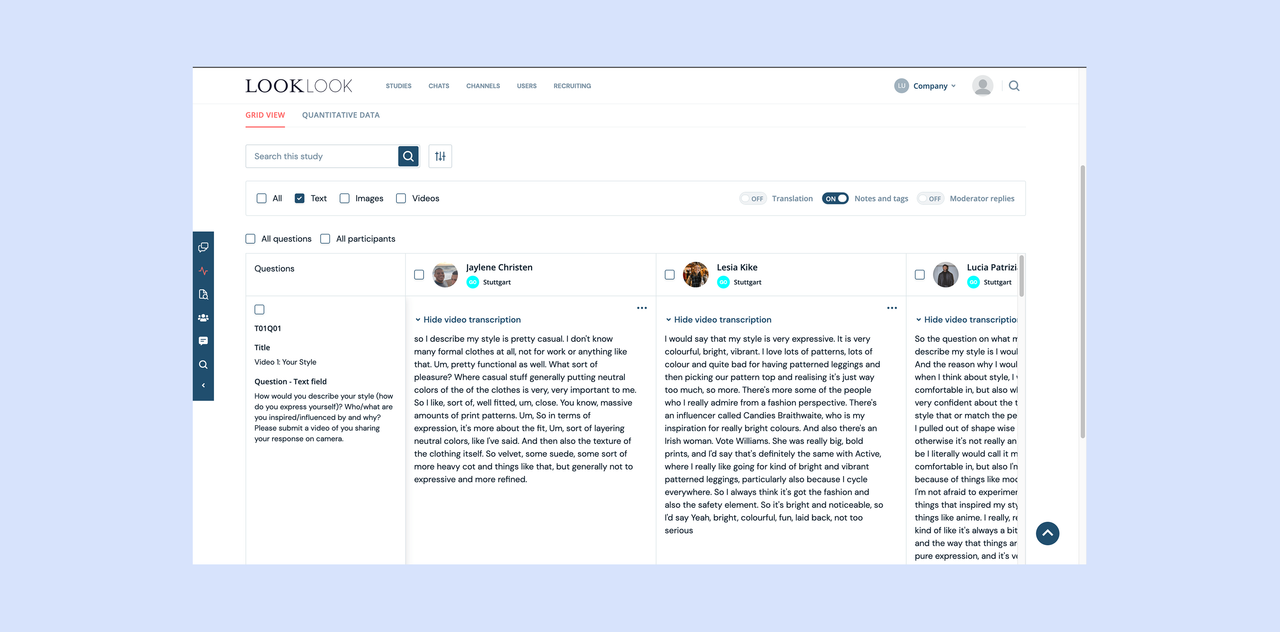
The solution simplified the execution of complex surveys, improved handling of audio and video responses, and made the platform more flexible for future needs.
Client quote
Thank you, Afterlogic, for your work! Following the project implementation, our business grew by 30%. The team successfully delivered the project within the agreed budget.
We would also like to highlight Afterlogic’s ability to deliver high‑quality solutions.

About client
LookLook is an independent platform for conducting online surveys, analyzing user experience, and studying consumer preferences.
The product is in demand among large companies, brands, and research agencies that value fast feedback and the ability to work with modern media formats (audio, video, and text).
About project
The client approached us with the goal of completely rebuilding the platform—significantly improving performance, flexibility, scalability, and UX.
The legacy solution could not handle the growing load and struggled to process large volumes of data efficiently, especially audio and video content, which were a key part of LookLook’s analytics.
The main challenge was to build from scratch a modern, intuitive, yet powerful product capable of supporting research of any level of complexity.
Request
Our team was tasked with creating a new version of the platform. It needed to be intuitive for end users while maintaining flexibility for administrators.
The platform had to automatically scale under peak loads, reliably handle large volumes of media data, and integrate with modern cloud services.
A strong focus was placed on usability: the platform had to simplify survey creation and management, participant communication, as well as data collection, transcription, and analysis.
Tools
We completely rebuilt both the frontend and backend using Node.js, Vue.js, and Nuxt.js. Figma was used for interface design and prototyping, while Asana and Slack supported project management and communication.
A key aspect of the project was migrating the platform to Amazon Web Services (AWS), enabling automatic scaling and high availability.
Team
The project involved frontend and backend developers, a DevOps engineer, a project manager, as well as designers and UX experts from a New York–based agency.
Our team was responsible for all stages of development, including architecture, cloud integration, and support, while the external agency handled prototyping and the final UI design.
What we did
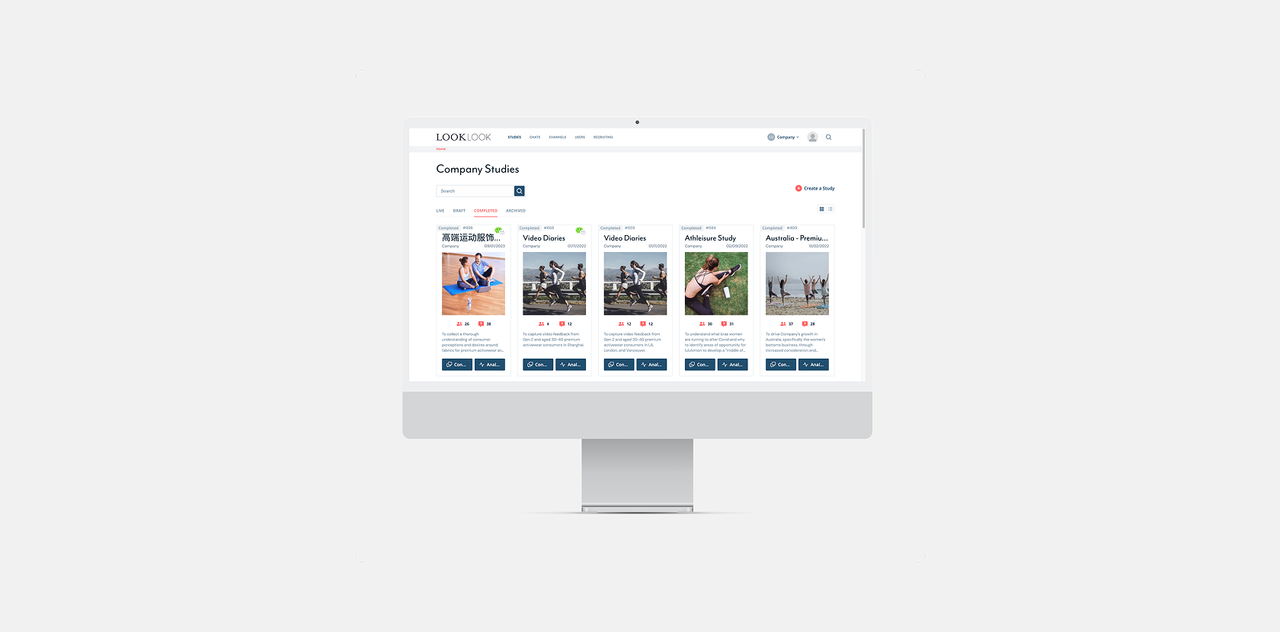
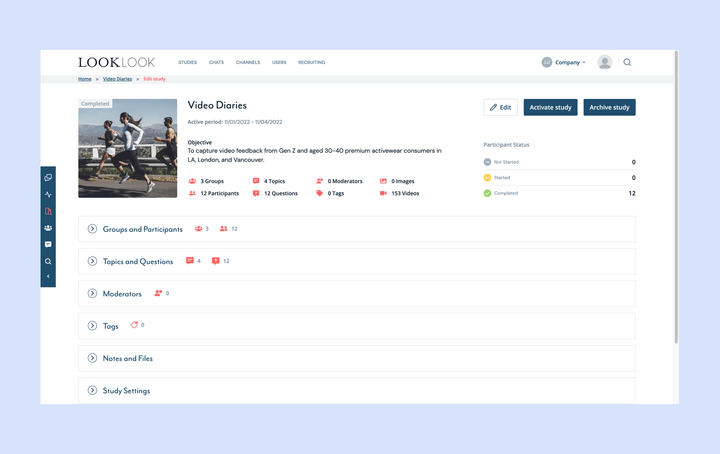
As part of the project, the team completely redesigned the platform’s architecture and interface. The legacy structure was replaced with a modern, user‑friendly design, where all key workflows are accessible within just a few clicks.
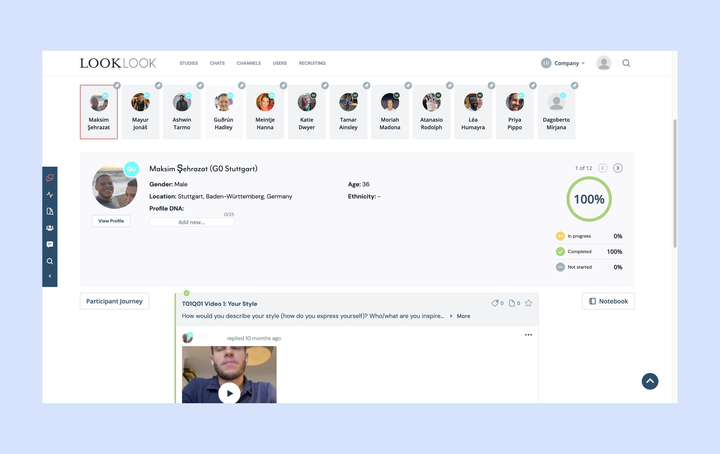
Both the frontend and backend were rebuilt using Node.js, Vue.js, and Nuxt.js, enabling support for audio and video content, as well as automatic transcription for faster analysis. A key milestone was the integration of AWS cloud services, allowing the platform to handle sudden traffic spikes and remain stable even with a large number of concurrent users.
Flexible tools were implemented for research agencies and administrators, enabling survey creation, participant filtering, communication, and data analysis.
A secure migration of all users and data to the new platform was successfully completed.
Result
After the release, the client received a modern and high‑performance platform for conducting online surveys. The solution significantly accelerated work with large datasets, simplified the analysis of audio and video responses, and expanded capabilities for organizing and conducting research.
Following implementation, LookLook increased sales by 30%, and the number of unique platform users more than doubled.