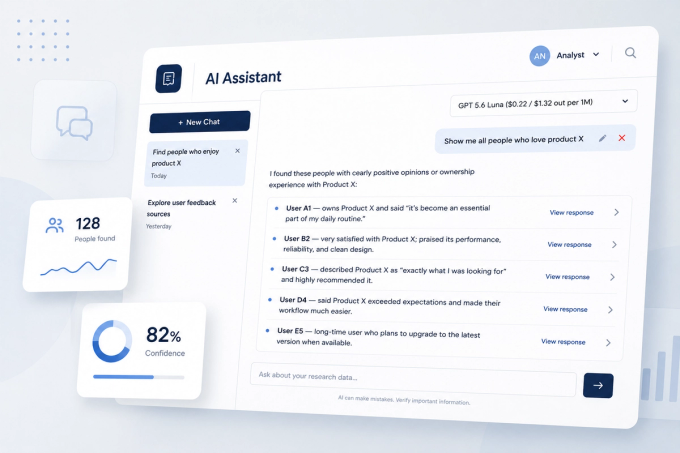
The more research a platform stores, the more valuable its data becomes — and the harder it can be to use. For LookLook, one of the research platforms we work with, this had become a bottleneck for moderators, especially when they needed to find the right participants for new studies or review large volumes of responses.
Selecting participants often meant searching through previous studies, opening individual messages, reading the context, and manually deciding whether someone matched the criteria. The client wanted to reduce that repetitive work and make participant selection and research analysis more consistent, so we integrated AI directly into the platform.
Asking questions instead of searching manually
Moderators can now describe what they need in natural language instead of moving through multiple screens and reviewing responses one by one. They can find people who previously discussed a particular product, behavior, or experience, review what a participant has said across several studies, or summarize relevant research data.
For example:
“Find participants who have discussed changing their purchasing habits in recent studies.”
The system searches the information already available on the platform and returns relevant results. This makes it easier to build participant groups: a moderator can start with a single request and then review the suggested matches instead of running several searches manually.
It also supports queries in different languages, allowing moderators to work with responses regardless of the language in which they were originally written. This is particularly useful for international studies and reduces the need for separate language‑specific workflows.
Giving AI access without giving it unrestricted access
Working with research data also meant dealing with access control. The platform already had a role‑based permission system, with different levels of access for administrators and moderators, including restrictions around personal participant information.
AI could not become a shortcut around those rules. Instead of giving the model direct access to the database, we built a controlled set of tools for retrieving participants, messages, groups, studies, and other platform data.
Every request respects the permissions of the person using the system. If certain information is unavailable to a user elsewhere on the platform, it cannot be exposed through AI either.
Keeping the results traceable
For research work, getting an answer is not enough — moderators also need to see where it came from. When relevant information is found in previous responses, they can open the original message and review the source directly.
This keeps AI in a supporting role: it helps narrow down large amounts of data and highlight what matters, while the original context remains available before any decision is made.
From finding information to taking action
The current version focuses on retrieving and analyzing data. The same architecture is also designed to support future actions inside the platform, such as adding selected participants directly to a study, saving them as a group, or helping prepare the structure and questions for new research.
These capabilities are planned, but are not part of the current implementation yet.
What changed
The value of the project is not simply that the platform now has an AI chat. It gives moderators a more direct way to work with years of accumulated research data while keeping existing permissions and source information under control.
Instead of manually searching through studies, they can ask questions, narrow down relevant participants and responses, work across languages, and verify the source behind the results they receive.
Have a similar challenge with data, research, or repetitive workflows in your product? Tell us about it, and we can discuss whether AI could make that process simpler.