AI CRM for B2B sales automation
For a client with a complex outbound sales process, we built a custom CRM tailored to their sales funnels, qualification rules, and communication channels.
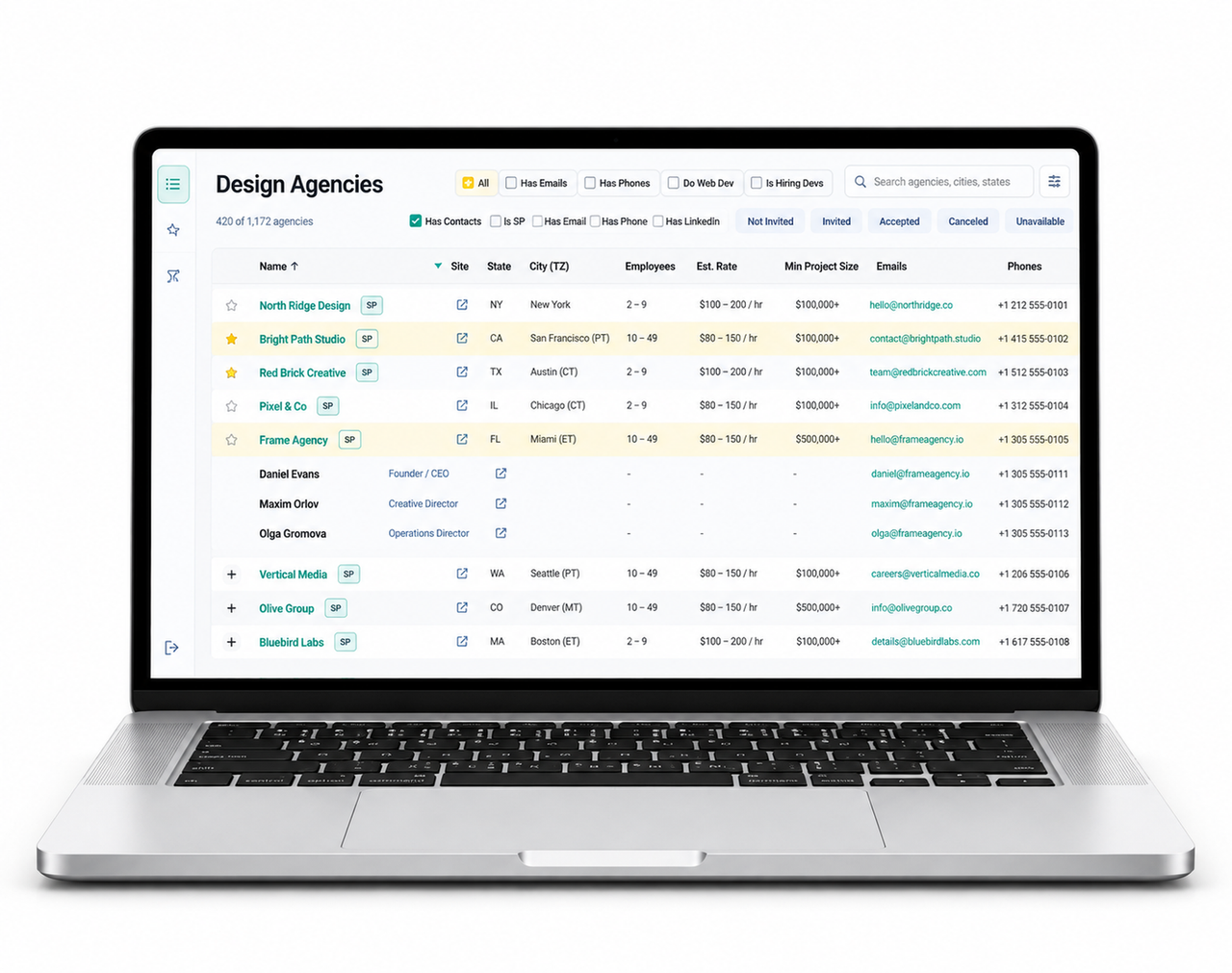
The system automatically finds and enriches leads, collects available contact data, segments prospects, and manages email outreach, follow‑ups, and interactions through channels such as LinkedIn.
Using modern AI‑assisted product design and development tools, we built a working version of the CRM in six weeks. More precise segmentation and personalized outreach helped triple the conversion rate from cold leads to customers.
Client quote
«The Afterlogic.Works team didn’t just deliver on our initial requirements — they helped us rethink the entire sales process. Instead of heavily customizing an existing CRM, we got our own system tailored to our sales funnels, qualification rules, and communication channels. After launch, the amount of manual work dropped significantly, while cold lead‑to‑customer conversion tripled. What impressed us most was that the first working version was launched in just six weeks.»
About client
The client is a B2B company that actively uses outbound sales to acquire new customers. Its sales process spans email, phone, LinkedIn, and other available channels. Results depend not only on outreach volume, but also on accurate segmentation, the right messaging, and choosing the right moment for each follow‑up.
About project
Initially, the client came to us to improve their lead generation and outbound sales process within an existing CRM. After reviewing the setup, we found that bringing all the required features together would require too many third‑party tools, integrations, syncs, and workarounds. Even then, the client would still be limited by the platform’s capabilities and roadmap.
Instead of adapting the sales process to fit the CRM, we proposed building a custom system around the client’s actual workflows.
Request
Our task was to build a CRM that could cover the full workflow for cold B2B leads. The system needed to automatically find potential customers, collect available contact details, qualify and rank leads based on the client’s rules, run email sequences and follow‑ups, and generate custom reports for the sales team.
Advanced segmentation was also a key requirement. Along with standard criteria such as region, industry, and company size, the system needed to take the lead’s language and cultural context into account.
Tools
To speed up design and development, we used modern AI‑assisted tools. They helped us map the business processes faster, create prototypes, design the architecture, build the interface, and run testing.
Team
The project was handled by a cross‑functional team that included a business analyst, full‑stack developers, a QA engineer, and a project manager. The developers were responsible for the CRM architecture, data model, automations, and integrations. The QA engineer tested the workflows, data processing, and transitions between stages.
What we did
First, we held a series of meetings with the client and mapped the sales process in detail. The analysis showed that trying to build all the required logic into the existing CRM would result in an overly complex setup with too many third‑party modules and limited integrations. So we designed a new CRM from scratch.
Automated lead sourcing and enrichment
The CRM automatically collects potential companies from connected sources and enriches each record with available contact data:
- Work email addresses;
- Phone numbers;
- LinkedIn profiles;
- Other social profiles;
- Company information;
- Employee role and position.
All data is combined in a single lead profile. The system removes duplicates and links contacts to the right companies.
Built custom qualification and scoring
Each lead is automatically evaluated based on the client’s own rules.
In addition to region, industry, company size, and potential deal value, the CRM also considers the type of business, the contact’s role in the decision‑making process, language, and expected communication style.
Added advanced segmentation
The system creates audience segments based on business, language, and cultural context.
For example, the founder of a tech startup, the head of a manufacturing company, and the owner of a regional retail business may respond to different arguments, tones of voice, and levels of detail.
Brought communication channels together
Email sequences, follow‑ups, calls, and tasks for LinkedIn or other outreach channels are managed within one system.
Sales managers can see the full history of interactions with each lead, upcoming actions, and the current stage of the sales funnel. When certain conditions are met, the CRM can automatically create a task, send a notification, or move the deal to the next stage.
Set up business automation
We implemented rules for lead assignment, qualification, ownership changes, stage transitions, reminders, and internal reporting.
The automation is built around the client’s real sales process and can evolve with it without the limitations of a standard SaaS platform.
Result
In six weeks, the client received a working CRM that covers the full outbound sales cycle — from lead sourcing and contact data collection to communication, qualification, and conversion into a customer.
With deeper segmentation, cold outreach became more targeted and relevant. As a result, the conversion rate from cold leads to customers increased threefold.
The client is no longer limited by a standard cloud CRM. They now control the data structure, automation logic, and further development of the system.
The project showed that modern AI‑assisted development makes it possible to build specialized business products much faster and more cost‑effectively than even a year ago.